Insulin Sensitivity Impairment from Reduced Sleep
Reviewing glucose handling alterations and mechanisms of insulin resistance development in sleep restriction.
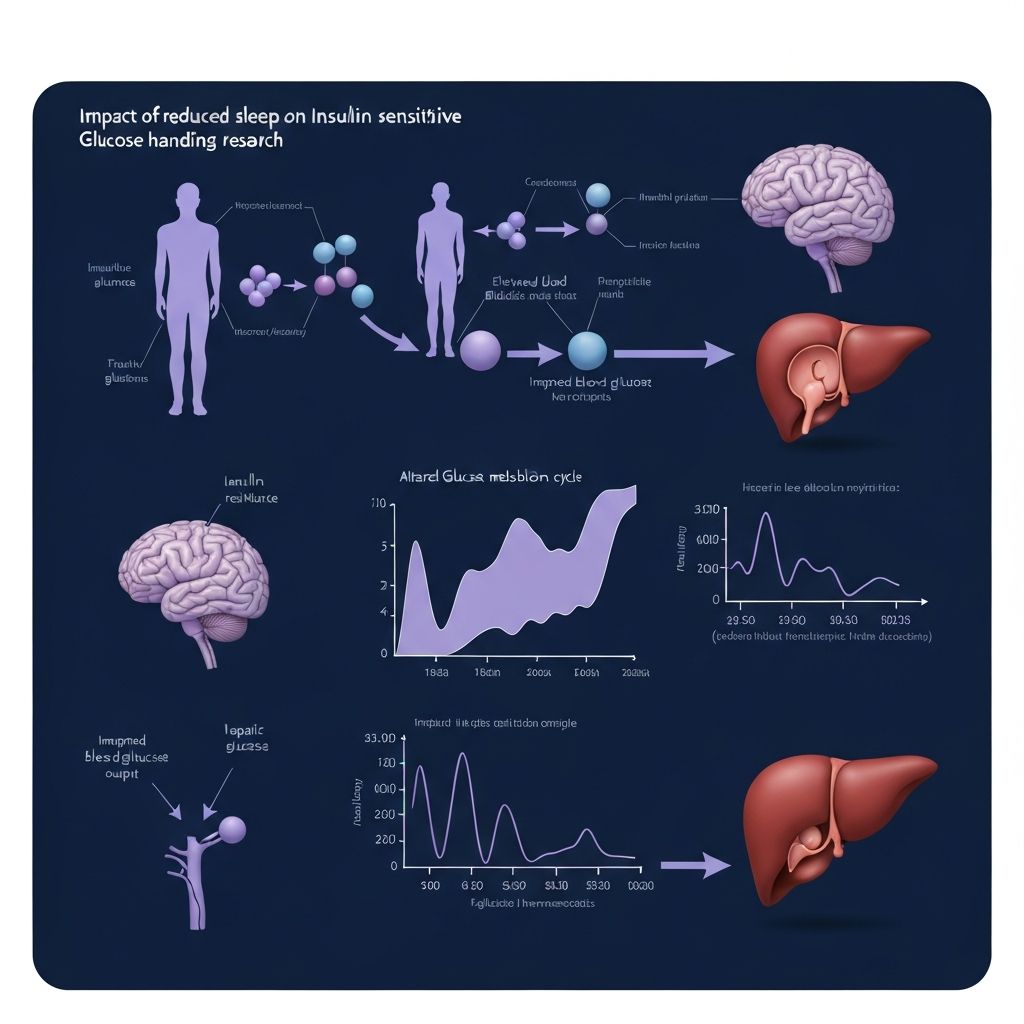
Circadian Rhythms and Basal Insulin Sensitivity
Insulin sensitivity demonstrates pronounced circadian variation in healthy individuals, with peak sensitivity occurring during sleep and early wakefulness and declining sensitivity progressing through daytime hours. This time-of-day dependent variation in insulin sensitivity relates to circadian oscillation of clock gene expression in insulin-responsive tissues, including skeletal muscle, adipose tissue, and liver. Clock genes regulate the expression of genes controlling glucose transporter (GLUT4) trafficking, glycolytic enzyme activity, and glucose oxidation capacity in mitochondria.
The nocturnal peak in insulin sensitivity coincides with reduced blood glucose concentrations and minimal carbohydrate intake, reflecting an evolutionary adaptation conserving carbohydrate availability for critical processes during sleep periods. This time-dependent insulin sensitivity is mediated by sympathetic nervous system withdrawal during sleep, elevated parasympathetic tone, and corresponding reductions in counter-regulatory hormone concentrations.
Acute Sleep Deprivation and Immediate Insulin Resistance
Single night or multi-night sleep deprivation produces rapid development of insulin resistance. Experimental studies employing intravenous glucose tolerance testing or euglycemic hyperinsulinemic clamp methodology demonstrate that one night of complete sleep deprivation reduces insulin sensitivity by 15-30% compared to control conditions with adequate sleep. This magnitude of insulin resistance development rivals the insulin resistance observed in individuals with established type 2 diabetes mellitus.
The mechanisms underlying acute sleep deprivation-induced insulin resistance include: (1) elevated cortisol concentrations suppressing GLUT4 expression and glucose transporter trafficking; (2) increased sympathetic tone elevating free fatty acid concentrations and impairing glucose oxidation through Randle cycle mechanisms; (3) reduced parasympathetic tone impairing pancreatic beta cell responsiveness; (4) impaired glucose-stimulated insulin secretion despite elevated fasting glucose; and (5) increased circulating free fatty acids competing with glucose as oxidative substrate.
Chronic Sleep Restriction and Progressive Metabolic Dysfunction
Chronic sleep restriction—sustained periods of habitual sleep duration of less than 6 hours nightly—produces cumulative deterioration of glucose metabolism and insulin action. Cross-sectional studies demonstrate that individuals sleeping habitually less than 6 hours exhibit fasting insulin concentrations 20-40% elevated compared to those sleeping 7-8 hours, indicating compensatory hyperinsulinemia in response to insulin resistance. Longitudinal studies following individuals over 2-10 year periods demonstrate that chronic sleep restriction increases the risk of type 2 diabetes development by 1.5-2.5-fold independently of body mass index and physical activity levels.
The cumulative effect of chronic nocturnal cortisol elevation, sustained sympathetic activation, and repeated circadian desynchronization produces enduring alterations in pancreatic beta cell function and peripheral insulin signaling. Studies measuring pancreatic beta cell secretory capacity demonstrate reduced insulin secretory response to glucose stimulation in chronically sleep-restricted individuals, reflecting beta cell dysfunction independent of peripheral insulin resistance.
Hepatic Glucose Production and Nocturnal Hyperglycemia
Sleep restriction elevates hepatic glucose production through combined mechanisms: increased gluconeogenesis driven by elevated cortisol and reduced parasympathetic tone, and increased glycogenolysis from sympathetic activation. Nocturnal glucose concentrations in sleep-deprived individuals frequently exceed daytime fasting glucose values, representing a reversal of normal circadian glucose patterns. This nocturnal hyperglycemia develops despite minimal to absent carbohydrate intake during sleep periods, indicating primary dysregulation of endogenous glucose production rather than excessive dietary carbohydrate intake.
The elevated nocturnal glucose in sleep-restricted individuals reflects impaired hepatic insulin sensitivity—the liver's failure to suppress glucose production in response to elevated insulin concentrations. This hepatic insulin resistance may result from altered glucagon secretion patterns, reduced parasympathetic inhibition of hepatic glucose production, and altered hepatic clock gene expression reducing the normal nocturnal suppression of gluconeogenic enzyme expression.
Altered Incretin Hormone Secretion and Glucose Tolerance
Incretin hormones—primarily glucose-dependent insulinotropic peptide (GIP) and glucagon-like peptide-1 (GLP-1)—mediate approximately 50-70% of postprandial insulin secretion and play critical roles in maintaining glucose homeostasis. Sleep deprivation impairs incretin hormone secretion in response to oral glucose loading, reducing GIP and GLP-1 concentrations by 20-40% compared to control conditions. This impaired incretin secretion contributes to reduced postprandial insulin secretion and elevated postprandial glucose excursions following meals in sleep-restricted individuals.
The mechanisms underlying sleep deprivation-induced incretin hormone impairment include altered enteroendocrine cell function, reduced parasympathetic signaling to intestinal L-cells (primary GLP-1 producing cells), and altered microbiota composition affecting metabolite-driven incretin secretion. Chronic sleep restriction produces sustained impairment of incretin hormone secretion, further contributing to postprandial glucose dysregulation and progressive beta cell dysfunction.
Systemic Inflammation and Insulin Resistance Development
Sleep deprivation elevates circulating concentrations of pro-inflammatory cytokines including interleukin-6 (IL-6), tumor necrosis factor-alpha (TNF-α), and C-reactive protein (CRP). These inflammatory mediators impair insulin signaling through direct effects on insulin receptor substrate (IRS) phosphorylation and through promotion of serine kinase activation, which interferes with normal tyrosine phosphorylation of the insulin receptor. Elevated IL-6 directly inhibits hepatic insulin clearance, elevating fasting insulin concentrations and contributing to hyperinsulinemia.
Chronic sleep restriction maintains elevated inflammatory cytokine production through altered circadian immune cell function, reduced melatonin production (which suppresses pro-inflammatory cytokines), and altered gut microbiota composition. This sustained inflammatory environment contributes to progressive beta cell dysfunction, pancreatic inflammation, and reduced beta cell mass in chronically sleep-restricted individuals.
Reversal of Sleep Deprivation-Induced Insulin Resistance
The insulin resistance induced by acute sleep deprivation demonstrates substantial reversal upon sleep recovery. A single night of adequate sleep following sleep deprivation substantially improves insulin sensitivity, though recovery may not be complete within a single night for severe deprivation. Chronic sleep restriction-induced insulin resistance shows more limited reversibility, with full insulin sensitivity recovery requiring weeks to months of sustained adequate sleep, particularly in individuals with substantial accumulated sleep debt.
This differential reversibility between acute and chronic sleep deprivation effects suggests that chronically sleep-deprived individuals may require prolonged periods of sleep extension to recover insulin sensitivity. The relative irreversibility of chronic sleep restriction effects highlights the critical importance of maintaining adequate sleep on a daily basis rather than relying on sleep recovery periods.
Limitations and Context: This article presents research findings on sleep restriction and glucose metabolism. Individual responses to sleep deprivation and recovery vary substantially based on age, genetic factors, baseline fitness level, and dietary composition. This content is for educational purposes only and does not constitute medical advice or personalized recommendations for managing glucose metabolism.
Continue to related energy regulation topics
Explore additional articles on circadian rhythms, lipid metabolism, and longitudinal research on sleep and metabolic health.
Return to blog overview